
From Content Security to Intent Security
AI agents are evolving from generating content to executing real actions, approving payments, modifying permissions, and triggering workflows across enterprise systems.
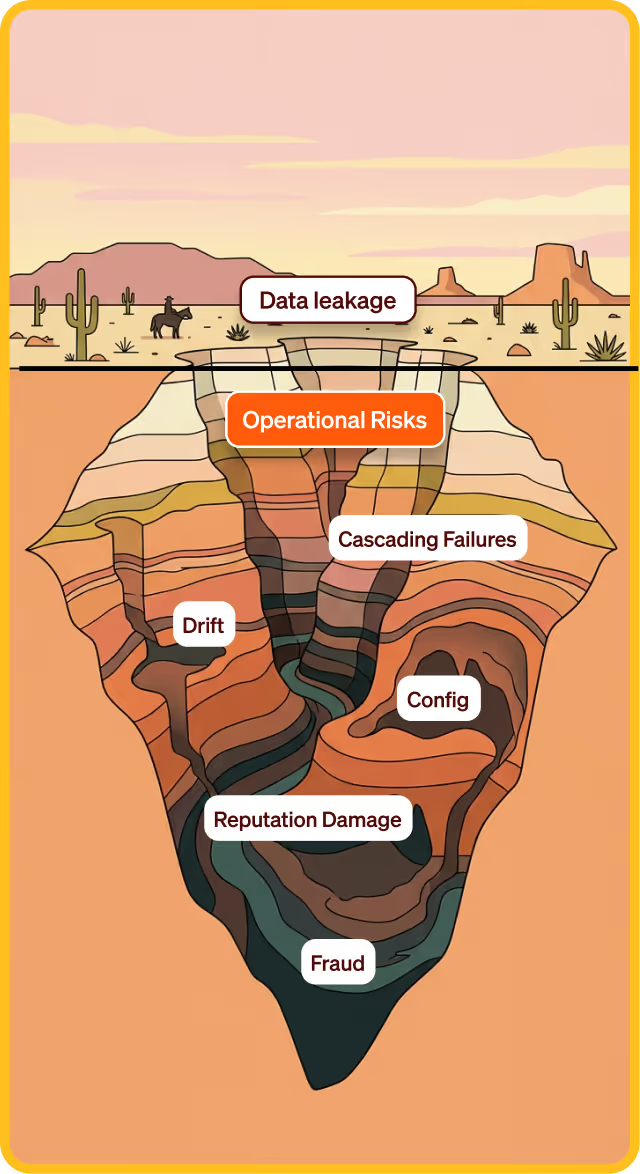
But security controls haven’t evolved at the same pace. Most existing tools weren’t designed to govern autonomous actions or determine whether an agent should take a specific action in a given context, at that exact moment.
Download the report to learn:
- Why traditional security controls break down once AI agents operate across tools and workflows
- The three critical security gaps exposing organizations to a new class of agentic risk
- Why security must shift from content moderation to behavior- and context-aware controls
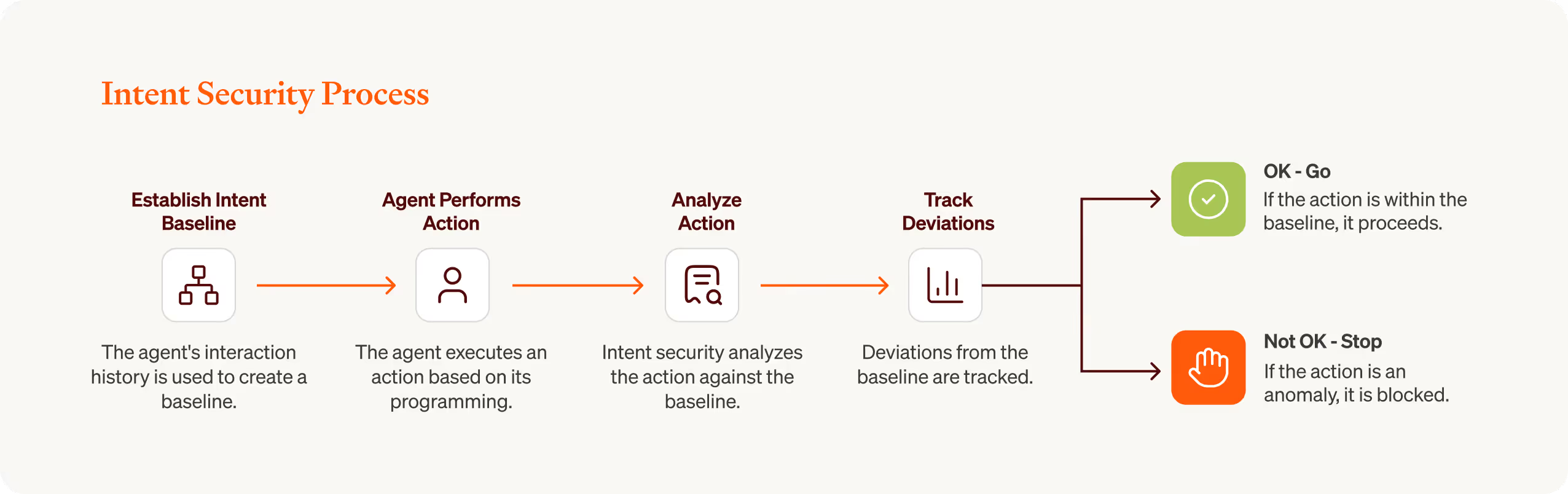
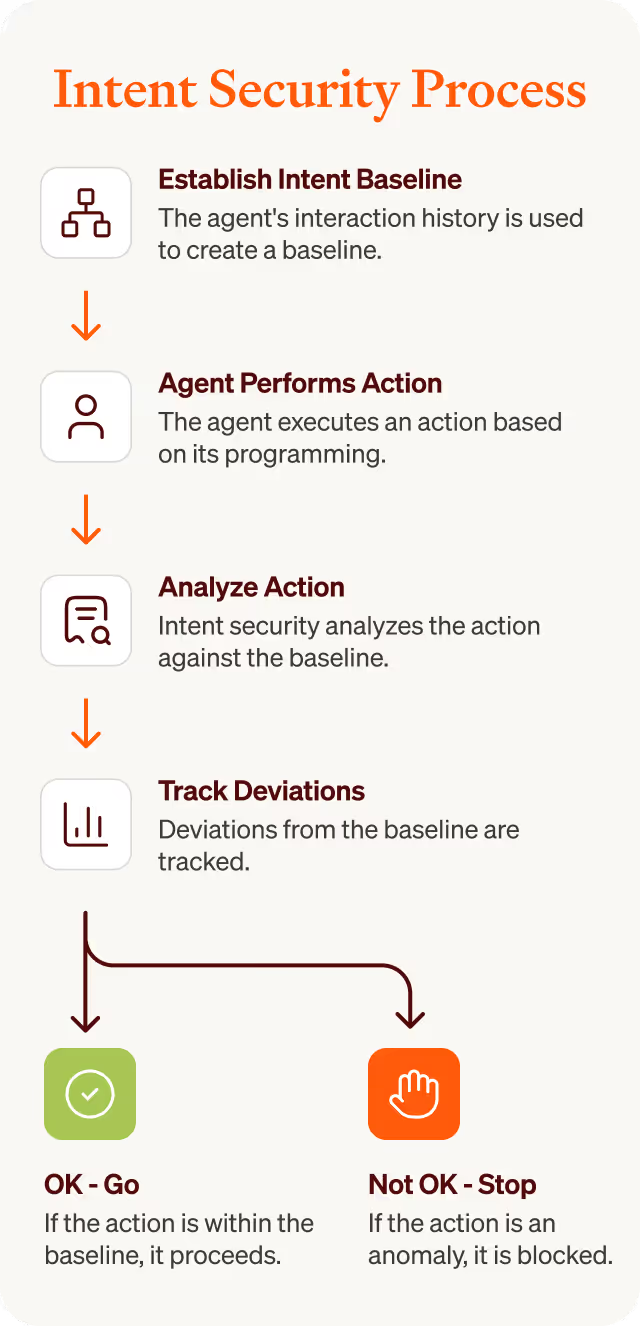
- How behavioral baselines and intent alignment help detect and stop unauthorized agent actions in real time
The 3 Agentic Security Gaps and How to Address Them
From Designed State to Emergent Context
AI agents generate dynamic, unbounded context shaped by conversation history, retrieved data, tool outputs, and prior reasoning. Their state is emergent and continuously influences future decisions.
From Communication to Action
Modern agents are empowered to execute tool calls. They access APIs, modify database records, send emails, and trigger autonomous workflows across external systems.
From Static Code to Dynamic Logic
Agent behavior is stochastic. It is influenced by fixed weights defining capability, variable context like prompts and RAG, and stochastic sampling parameters.