Enterprise AI Governance for Modern Enterprises Seeking Visibility, Control & Compliance

What Is Enterprise AI Governance?
Enterprise AI governance is the operational framework that ensures AI applications, models, and agents are used in a controlled way across the organization. It extends beyond high-level policy documents to include runtime oversight of prompts, outputs, access permissions, third-party integrations, and data flows.
As LLM adoption accelerates and risks such as prompt injection, data leakage, and model manipulation become more prevalent, governance becomes the mechanism that keeps innovation aligned with security and enterprise risk thresholds.
Key Takeaways From This Article
- Why traditional IT governance models fail in non-deterministic GenAI environments
- The emerging security and compliance risks introduced by LLM applications and AI agents
- How shadow AI and uncontrolled access create governance blind spots
- Regulatory pressures shaping enterprise AI oversight
- The core capabilities required to operationalize AI governance at runtime
Why Enterprise AI Governance Matters in Modern Organizations
Enterprise AI adoption is accelerating faster than most organizations’ ability to govern it. What began as isolated experimentation with generative tools has evolved into production-grade workflows, autonomous agents, and AI-powered decision support embedded across the business. Without governance that spans security, risk, compliance, and accountability, AI becomes a force multiplier for operational and regulatory risk.
Enterprise AI Governance Use Cases for Security and Compliance Teams
Enterprise AI governance becomes real when it’s applied to everyday operational risk. The following scenarios illustrate how structured oversight allows organizations to scale AI safely, without slowing innovation.
Controlling Employee Access to GenAI Tools
As GenAI tools spread across departments, access is quickly outpacing policy. Organizations must ensure that access aligns with role-based responsibilities.
Example scenario:
A global financial institution deploys an internal GenAI assistant for analysts. Within weeks, employees begin experimenting with external copilots and browser-based AI tools.
Security doesn’t shut usage down. Instead, governance is applied at the interaction layer:
- Continuous discovery of all GenAI tools being accessed
- Role-based restrictions on high-risk models
- Context-aware policies for interactions involving sensitive datasets
- Centralized visibility into usage patterns across departments
Employees retain productivity gains, but AI access is no longer unmanaged or invisible.
Preventing Data Leakage Through AI Interactions
GenAI introduces new leakage pathways through prompts and outputs.
Example scenario:
In a healthcare organization, staff use a GenAI assistant to draft referral summaries. Some begin including full patient details directly in prompts.
Rather than relying solely on training and policy reminders, the organization implements runtime inspection of AI interactions. Prompts and outputs are evaluated in real time against data classification policies. Now, it’s possible to automatically block or redact sensitive data appearing in contexts where it shouldn’t.
Governing Third-Party AI Applications and Agents
Third-party AI agents often operate with broad permissions because that’s what enables meaningful automation and cross-system intelligence. The tradeoff is reduced visibility: organizations may not fully understand what data the agent can access.
Example scenario:
A retail enterprise integrates a third-party AI agent to automate refunds and loyalty adjustments. The agent interacts with CRM systems and order databases via API.
To prevent overreach, governance controls are applied dynamically:
- Monitoring of tool and API invocation by the agent
- Context-based restrictions on access to sensitive customer attributes
- Policy validation before high-risk actions are executed
- Full logging of agent decisions and data access
The agent continues to automate workflows, but within clearly enforced boundaries.
Supporting Audit and Compliance Readiness
Regulators increasingly expect proof of control, not just documentation. That’s easier said than done when you’re dealing with dynamic, probabilistic systems. Traditional policy documents can’t demonstrate how the system behaves in real-world use.
Example scenario:
During a GDPR audit, a multinational enterprise is asked to demonstrate how its AI models process personal data.
Because AI interactions are continuously logged and mapped to enforceable policies, the organization can provide a current inventory of AI in production. They can also show evidence of access controls tied to user roles and data sensitivity.
Records of blocked or remediated high-risk interactions, along with traceable logs, make passing regulatory review much easier.
Reducing Shadow AI and Unmonitored Usage
Shadow AI spreads quietly through browser tools, embedded copilots, and developer assistants. An organization’s AI footprint is almost always bigger than leadership thinks.
Example scenario:
A technology company discovers that multiple teams are using external GenAI platforms for code generation and contract review. None of these are formally approved.
Instead of relying on blanket blocking, the organization implements continuous AI discovery across endpoints and applications.
Unapproved tools are identified, risk-assessed, and either:
- Governed under enterprise policy controls
- Restricted based on risk level
- Replaced with sanctioned alternatives operating under monitored conditions
Key Features of Enterprise AI Governance Platforms
Effective enterprise AI governance platforms operate at the interaction layer between users, data, applications, and models. Core capabilities should include:
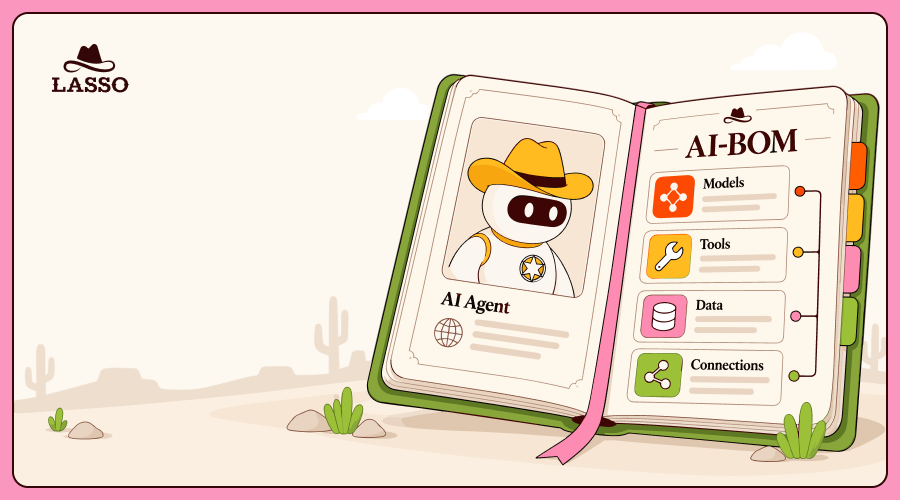
- AI App and Agent Discovery: Continuous discovery and inventory of GenAI applications, copilots, LLM endpoints, RAG pipelines, and autonomous agents across sanctioned and shadow environments.
- Identity-Aware Access Controls: Context-based enforcement of least-privilege access using user identity, role, session context, and data sensitivity to govern AI interactions and tool invocation.
- Prompt and Response Inspection: Inline inspection of prompts and model outputs to detect sensitive data exposure, prompt injection, adversarial content, and policy violations before execution or release.
- Real-Time Monitoring and Alerts: Continuous telemetry and behavioral monitoring across AI workflows with anomaly detection and automated alerting for high-risk or non-compliant activity.
- Automated Policy Enforcement: Dynamic blocking, redaction, or modification of AI interactions based on enterprise policies without requiring changes to application code.
- Audit Logs and Governance Reporting: Immutable logging of user, model, and agent activity with traceable policy decisions to support audits, investigations, and regulatory evidence requirements.
Integration With Identity Providers and Security Tools: Native integration with IdPs, SIEM, SOAR, DLP, and zero-trust architectures to extend AI governance into existing enterprise security ecosystems.
Regulatory and Compliance Requirements for Enterprise AI Governance
Regulators are moving quickly to define accountability for how organizations deploy, monitor, and control AI. Enterprise AI governance must now align with data protection laws, sector regulations, and emerging AI-specific standards.
AI Governance Under GDPR and Data Privacy Rules
Under GDPR and similar data protection frameworks (CCPA, HIPAA, etc.), organizations remain responsible for the handling of personal data, even when the actual processing is done by AI models.
For AI governance, this introduces several critical obligations:
- Lawful basis and purpose limitation: Personal data used in prompts, training, or retrieval must align with declared purposes.
- Data minimization: AI should not process more personal data than necessary.
- Transparency and explainability: Individuals have the right to understand how automated decisions affect them.
- Data subject rights: Organizations must be able to respond to access, correction, and deletion requests.
Because AI models are opaque and dynamic, compliance requires runtime visibility into how data is flowing in and out. Governance mechanisms must make these flows observable and controllable.
Preparing for the EU AI Act and Emerging Standards
The EU AI Act introduces a risk-based framework that classifies AI according to its potential impact. High-risk AI deployments in finance, employment, healthcare, or critical infrastructure face stricter requirements, including:
- Documented risk assessments
- Human oversight mechanisms
- Technical robustness and cybersecurity controls
Even organizations outside the EU may fall under the Act if their AI tools impact EU citizens.
Beyond the EU AI Act, global standards are emerging through NIST’s AI Risk Management Framework (AI RMF), ISO/IEC initiatives, and sector-specific regulators.
Building Audit-Ready Governance Processes
Regulators and auditors increasingly expect evidence of control. This means enterprises must be able to answer questions like:
- Which AI tools and LLMs are in use?
- What data do they access?
- Who can interact with them, and under what constraints?
- How are risks monitored and mitigated over time?
To be truly audit-ready, governance requires continuous visibility into AI usage, so that policies can be enforced consistently, and decisions based on those policies can be logged.
In other words, it must function as a living control system capable of demonstrating traceability and accountability throughout the AI lifecycle.
Enterprise AI Governance Challenges and Threat Landscape
Without adequate governance built into AI workflows, organizations face security and compliance risks that traditional IT governance models were never designed to handle. In fact, EY reports that 50% of CxOs believe their organization’s risk
approach is insufficient to address the next wave of AI technologies.
Unapproved GenAI Tools Entering the Enterprise
Employees across teams are rapidly adopting generative AI tools without going through IT or governance review. This proliferation of unsanctioned AI usage is often called Shadow AI, and it carries many of the same risks organizations experienced with shadow IT, but amplified by the dynamic, data-centric nature of LLMs. Shadow AI can expose sensitive data, create unmonitored decision flows, and evade enterprise controls.
Prompt Injection and Emerging AI Threats
Prompt injection, where input crafted by a malicious or careless actor alters an AI model’s behavior or output in unintended ways, is now recognized as a leading security risk in generative AI deployments. These vulnerabilities stem from the fundamental architecture of large language models, which lack inherent separation between instructions and data, making it difficult to enforce conventional security boundaries.
AI Agents and Autonomous Workflow Risks
The rise of autonomous AI agents adds a new dimension to enterprise risk. Unlike simple chatbot interfaces, agentic systems can trigger actions, access data, and integrate with backend APIs without granular oversight. Researchers have highlighted that this autonomy introduces distinct vulnerabilities related to transparency, decision accountability, and governance circumvention.
Governance Gaps Across Distributed Teams
AI adoption often happens in a decentralized fashion: product teams, analytics groups, and business units all start using AI tools independently. This distributed usage creates governance gaps, where no single team has a complete view of what tools are in use, what data they touch, or how decisions are made.
Enterprise AI Governance Best Practices for Long-Term Success
How Lasso Brings Visibility and Control to Enterprise AI Governance
AI governance breaks down when organizations lack visibility into how AI is actually used. Policies and guidelines alone can’t govern probabilistic systems that change at runtime. Governance must be enforced where AI interactions occur—across prompts, data access, tool calls, and outputs.
Lasso provides this control layer by operating between enterprise users, applications, and GenAI models, enabling real-time visibility, enforcement, and auditability across AI workflows.
- Centralized visibility into enterprise AI usage through continuous discovery of apps, copilots and AI-assistance tools. Lasso surfaces which models are in use, who is accessing them, and why.
- Runtime governance, enforced when it matters: AI risk emerges at runtime, not just during design. Lasso inspects prompts, retrieved context, tool calls, and outputs in real time, to prevent sensitive data exposure, restrict high-risk actions, and block unauthorized behavior without disrupting legitimate use.
- Context-Based Access Control (CBAC) evaluates user identity, request context, data sensitivity, and intended actions to make precise governance decisions during each AI interaction.
- Governance across third-party and embedded AI: Lasso extends governance across models, copilots and agent frameworks by enforcing enterprise policies at the interaction layer, regardless of where the model is hosted.
- Auditability and compliance readiness emerges naturally from continuous logging of AI interactions and policy decisions that support investigations and regulatory reviews.
Conclusion
Most enterprises cannot answer a simple question: Which AI tools are currently interacting with our sensitive data, and under what controls?
As GenAI applications, embedded copilots, and autonomous agents spread across teams, AI usage often scales faster than oversight. Prompts move across systems. Agents invoke APIs. Outputs influence decisions. Without runtime visibility and enforceable guardrails, governance gaps expand quietly.
Enterprise AI governance requires continuous discovery, contextual access control, real-time monitoring, and audit-ready traceability built directly into AI workflows.
If you’re evaluating how to establish centralized oversight and enforceable controls across your AI environment, book a demo to see how Lasso helps security and compliance teams operationalize AI governance at scale.
FAQs
.png)
.png)

Trusted Security for a World Run by AI